Spine Anatomy & Posture Guide
Use the illustration to locate the major levels of the spine, then review practical posture guidance and how spinal degeneration is commonly described. This educational tool cannot determine the cause of symptoms.
Spine Locator
Select a level to locate it on the illustration and identify its spinal region. Symptoms and health conditions cannot be diagnosed from a vertebral level on a chart.
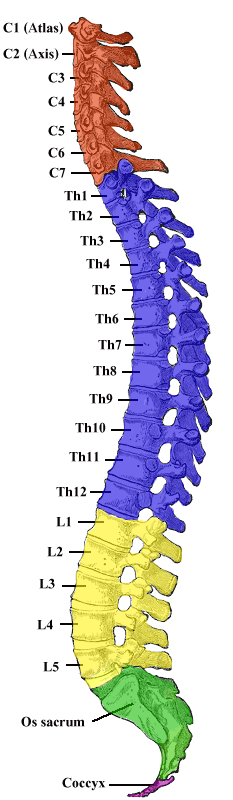
Atlas
Spinal region
Important note
Body Postures
Small, everyday postures add up. Here's what good form looks like next to the habits worth correcting, for four everyday positions.
Driving
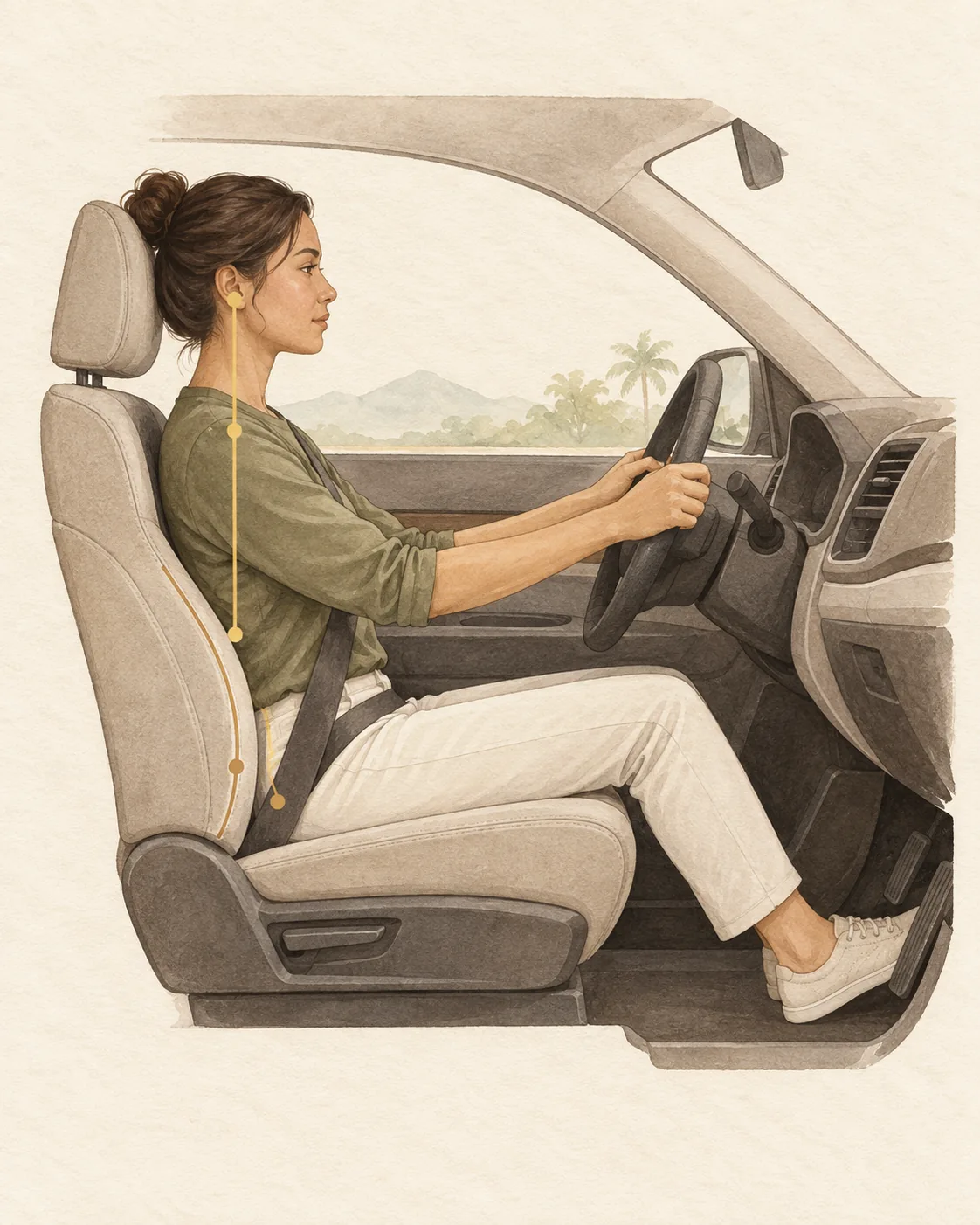
Neutral driving posture reference
- Head upright, in line with shoulders
- Shoulders back against the seat
- Lower back supported
- Knees at seat height, not above hips
- Head jutting toward the wheel
- Shoulders rounded forward
- Lower back unsupported, slouched
- Seat too far back, leg overextended
Sitting
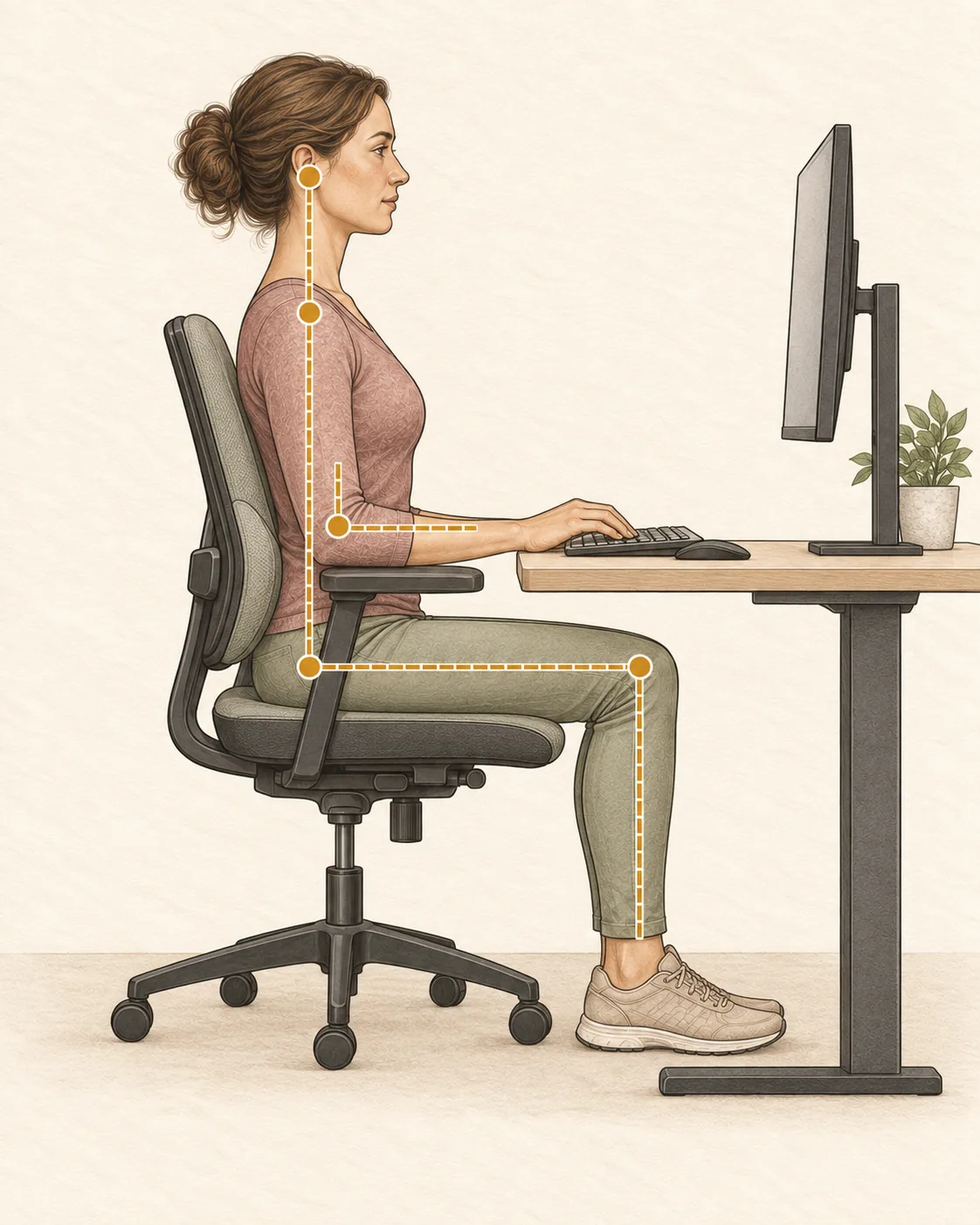
Neutral sitting posture reference
- Feet flat on the floor
- Back against the chair's support
- Screen at eye level
- Elbows close to the body
- Legs crossed for long stretches
- Slouched, unsupported lower back
- Leaning toward a low screen
- Hunched shoulders
Standing
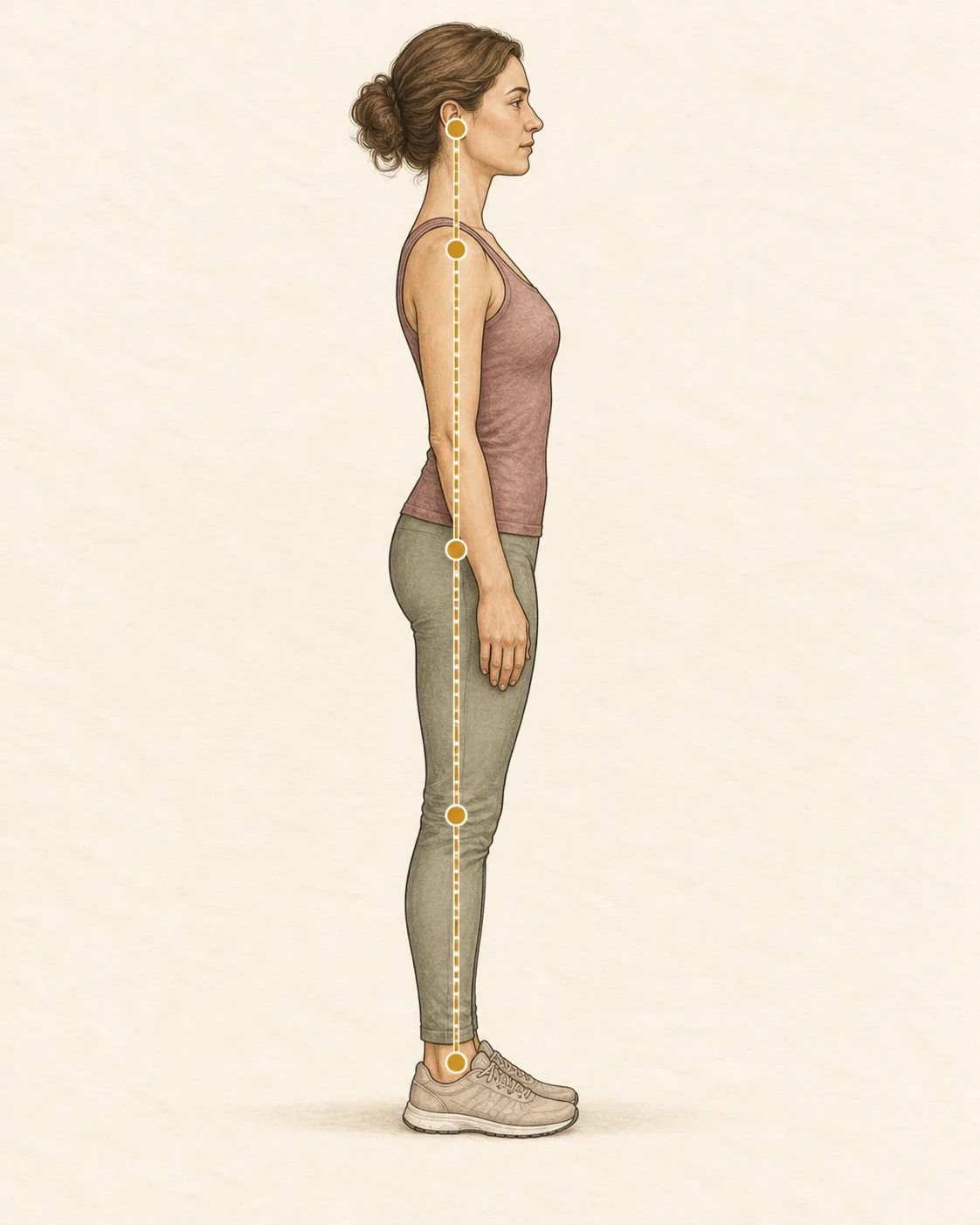
Neutral standing posture reference
- Weight even on both feet
- Chin level, not jutting forward
- Shoulders relaxed, not rounded
- Comfortable, supportive shoes
- Weight shifted to one hip
- Head forward of the shoulders
- Rounded upper back
- Locked knees
Sleeping
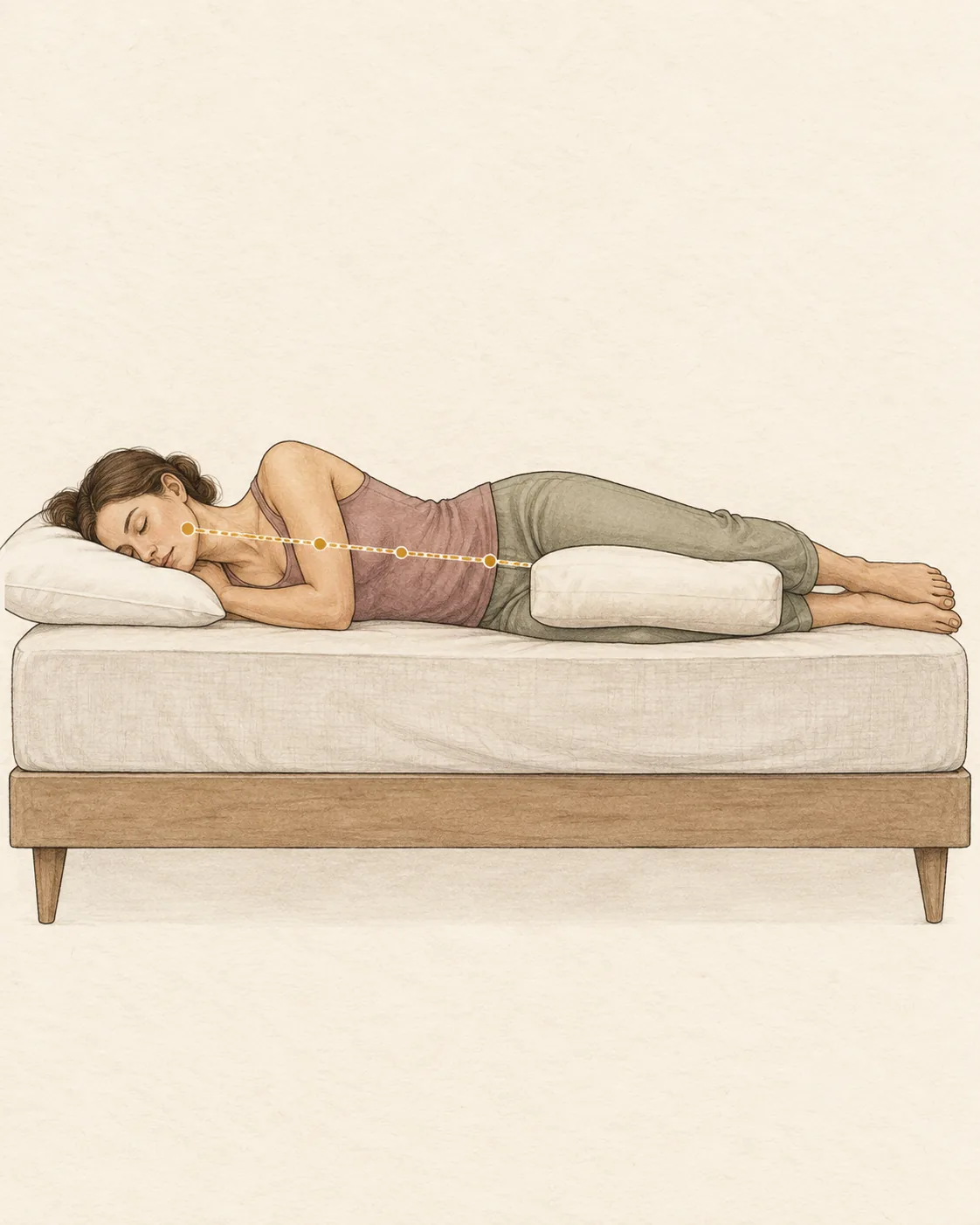
Neutral side-sleeping posture reference
- Neck supported in a neutral line
- Pillow height matched to sleep position
- Knees slightly bent, one pillow between them if on your side
- Neck bent sharply by a too-high pillow
- Stomach sleeping, head twisted to one side
- No support under the knees or waist
Understanding Degenerative Spine Changes
Age-related disc and joint changes vary from person to person and do not follow one guaranteed progression. Our Patient Resources page explains what may change and why an individual evaluation matters.
Understand Spinal ChangesQuestions about what you found?
This chart is educational — the best next step is a real evaluation. Call to set up a visit.